
From God of War to Jedi: Survivor, Senior Respawn Environment Artist shares his story and pro workflow tips
Giovani Magana is a Senior Environment Artist at Respawn Entertainment with a decade of experience in the games industry. He has also contributed to projects for studios including Skydance and Santa Monica Studio, with shipped titles that include God of War: Ragnarok, Star Wars Jedi: Survivor, and The Walking Dead.
His portfolio is nothing short of impressive. However, his path to landing a senior role at Respawn was not without its challenges. Giovani grew up in Mexico, where he developed a love of drawing as a child, spending many hours drawing comic books and superheroes. As he grew up, he began studying electrical engineering; while this was very different from what he does today, his creative spark was always kept alive thanks to his deep love for drawing. Later, he trained himself to paint still lifes from real life. Sitting in front of physical objects taught him how to actually see how light wraps around a form, how values create weight, and how reflections inherit the colors of their environment.
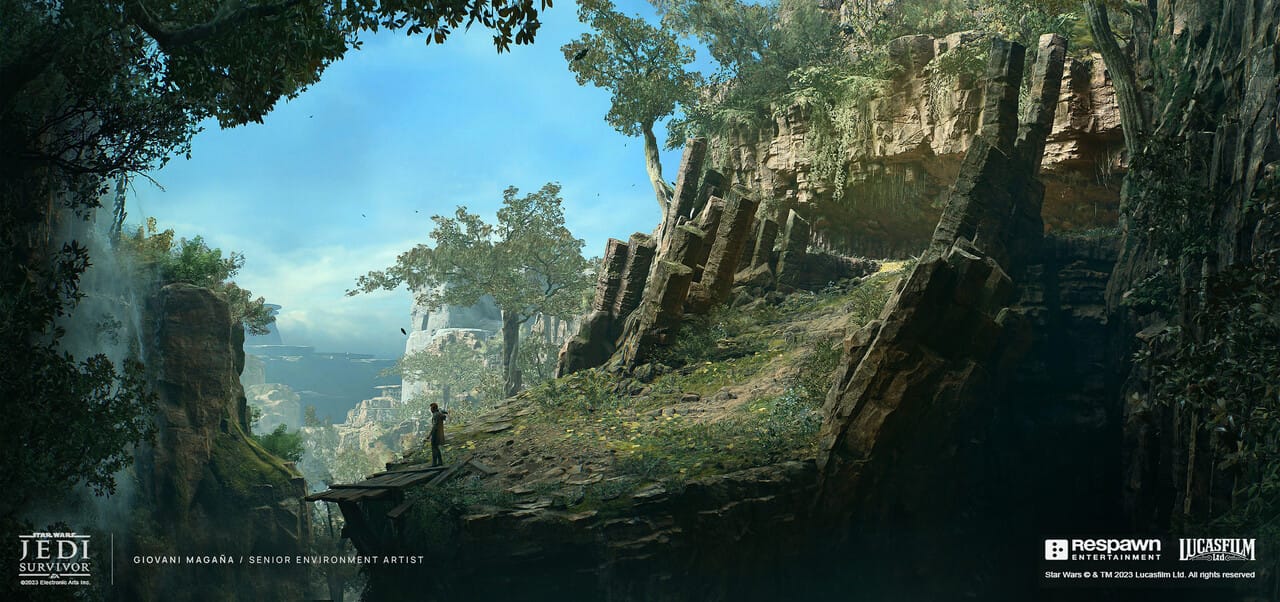
In 2008, an unexpected life event led Giovani to relocate to the United States. To survive the financial crisis, he found himself juggling demanding jobs in both construction and retail. While not in his imagined career plan, it was through embracing very uncertain times that he was pushed to focus on his passion for art. Eventually, this led him to make a definitive decision: to enroll at an art college to study Multimedia Art.
He began his studies with zero computer skills and basic English. “The language and technical barriers were so high that I had to take my classes twice just to understand the materials,” he explains. “But when I finally finished the program five years later, I still didn’t know how to translate those digital skills into a real career.” For this reason, Giovani now considers himself a mostly self-taught 3D artist. He elaborates: “I went back to the only foundation I knew: I started drawing again — but this time, digitally. I spent hours watching training videos, and The Gnomon Workshop library was an exceptional resource for the latest workflows, watching tutorials by digital painting artists like Feng Zhu, Dylan Cole, Aaron Limonick, and James Paick. I watched and listened to them break down core fundamentals such as perspective, scale, form, and color, which allowed me to understand art basics.”
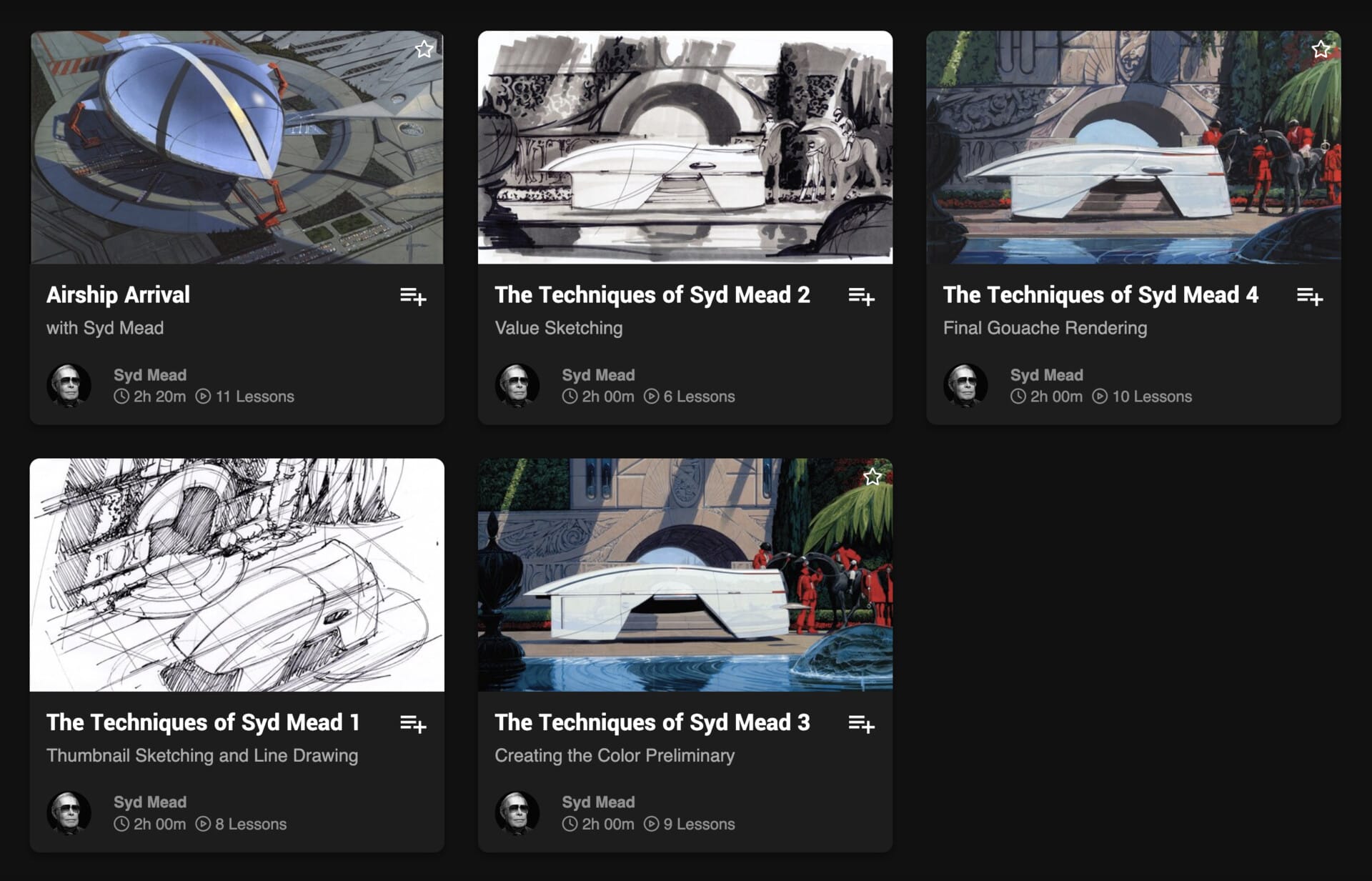
During his studies, Giovani ran into a recurring problem. He explains: “I skipped the researching and blocking out ideas that caused most of my early projects to fail. I remember watching Syd Mead paint. He would prove his idea by painting his sketch; if the idea was good, he would do a larger sketch with more detail, and if that idea was good, he would then paint the final detailed painting.” He also recalls being told by someone that “Your tenth design will be better than your first,” which always reminds him to study ideas first, as there may be more to the idea and improvements to be made before committing to the final project.
While transitioning his knowledge into digital art, Giovani discovered that the way industry masters approached design was pivotal in his journey to mastering his own skills. “They weren't just painting environments,” he says. “They were designing their own functional vehicles and complex architecture from scratch. It was through watching these artists work that I could see how their mind-blowing landscapes were entirely supported by traditional pillars.”
Two of Giovani’s favorite must-watch Gnomon Workshop titles are Environment Design and Illustration by Aaron Limonick, and How to Draw Hovercraft and Spacecraft by Scott Robertson.
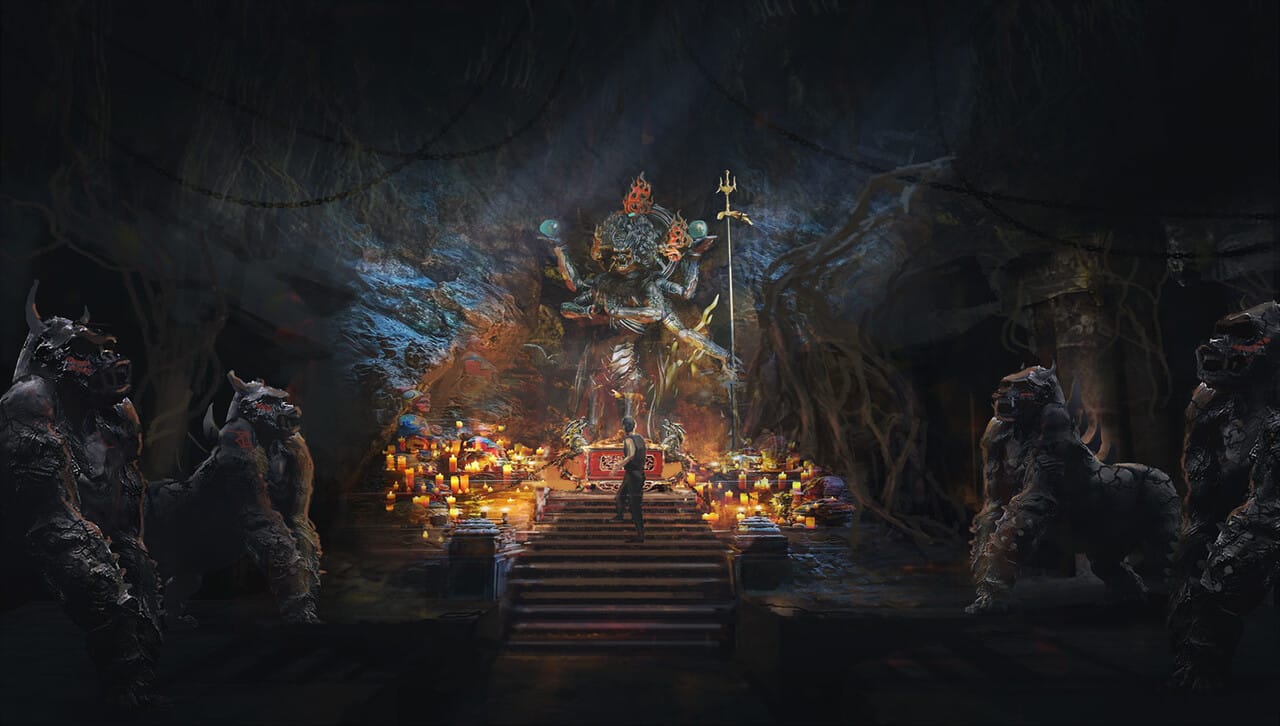
Nine years later, Giovani now works at one of the world’s leading AAA game studios. Passionate about fantasy and sci-fi environments, he loves creating both large architectural and organic elements as well as small props that tell stories through their unique details, combining imagination with realism to elevate immersive game worlds.
“If your foundation is anchored in traditional artistic principles, your value as an artist will never become obsolete.”
— Giovani Magana
The Student Becomes the Teacher
And after nine incredible years working at top game studios, Giovani is one of more than 200 instructors sharing their own tried-and-tested tips and tricks online. “My Gnomon Workshops are meant to help beginners learn the whole process of creating unique environments,” he explains. “In my first workshop, I focus on the basic principles a junior artist should have. I show the importance of designing and blocking out your ideas before adding detail. Digital sculpting and rock and architecture creation are useful tools for artists. I wanted to teach how to create a modular kit of architectural assets.”
He further explains that: “Software packages will inevitably change, evolve, or be automated by new technologies. But if your foundation is anchored in traditional artistic principles, your value as an artist will never become obsolete. You won't just be a button pusher; you will be an architect of worlds. The production pipeline is rarely a neat, step-by-step recipe. In reality, I multitask heavily: one day I am detailing a hero asset in ZBrush; the next, I am diving into proceduralism to speed up asset generation, or working on custom textures in Substance Designer. It is a beautiful, chaotic process that requires you to make hundreds of independent decisions,” he concludes.
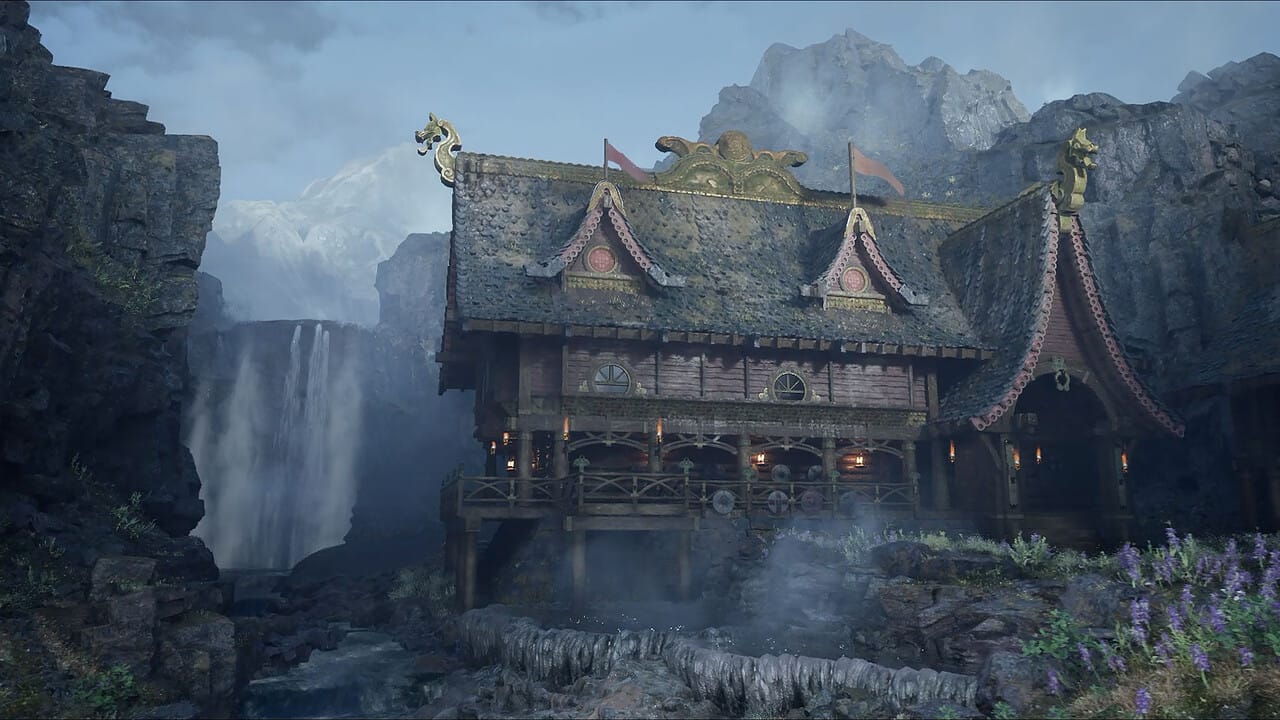
Giovani primarily works in Unreal Engine for world-building and uses Substance Designer for organic sculpting, hard-surface modeling, and material creation. He also enjoys using Houdini as a flexible tool for creating detailed assets and streamlining workflows.
When starting on a new environment, Giovani says that concepts are a key part of the development process. “It’s up to each artist to develop a kit of assets that will work on a large-scale environment,” he explains. “Proving your ideas on a small scale is usually where I will start. Detailed assets are the last thing for me.”
Giovani’s Tips for Researching & Blocking Out Ideas
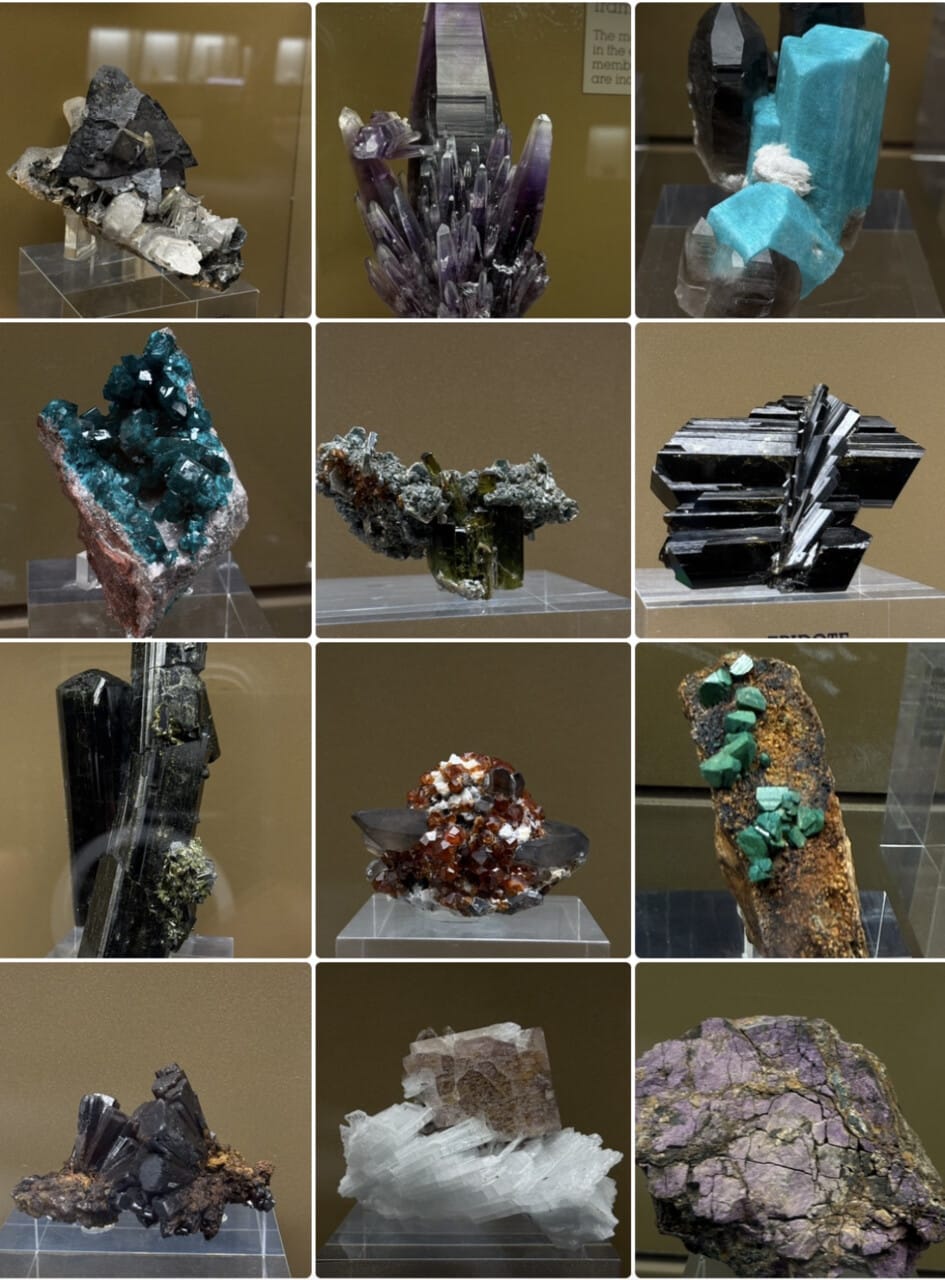
“It’s important to be careful not to rely solely on what is available online for inspiration,” Giovani warns other artists. “When you base your art entirely on another digital artist's work, you are merely absorbing the filtered, diluted ideas of someone who has already completed the process of elimination for you. You become a copy of a copy. True inspiration requires you to close your computer and step out into the physical world. For me, this is where the joy of being an artist lives. During a production break, I recently visited a Natural History Museum and stumbled into a gem and mineral exhibit. Seeing those raw, unedited geometries and vibrant colors of the natural stones unlocked a wave of creativity in me that no internet search could match.”
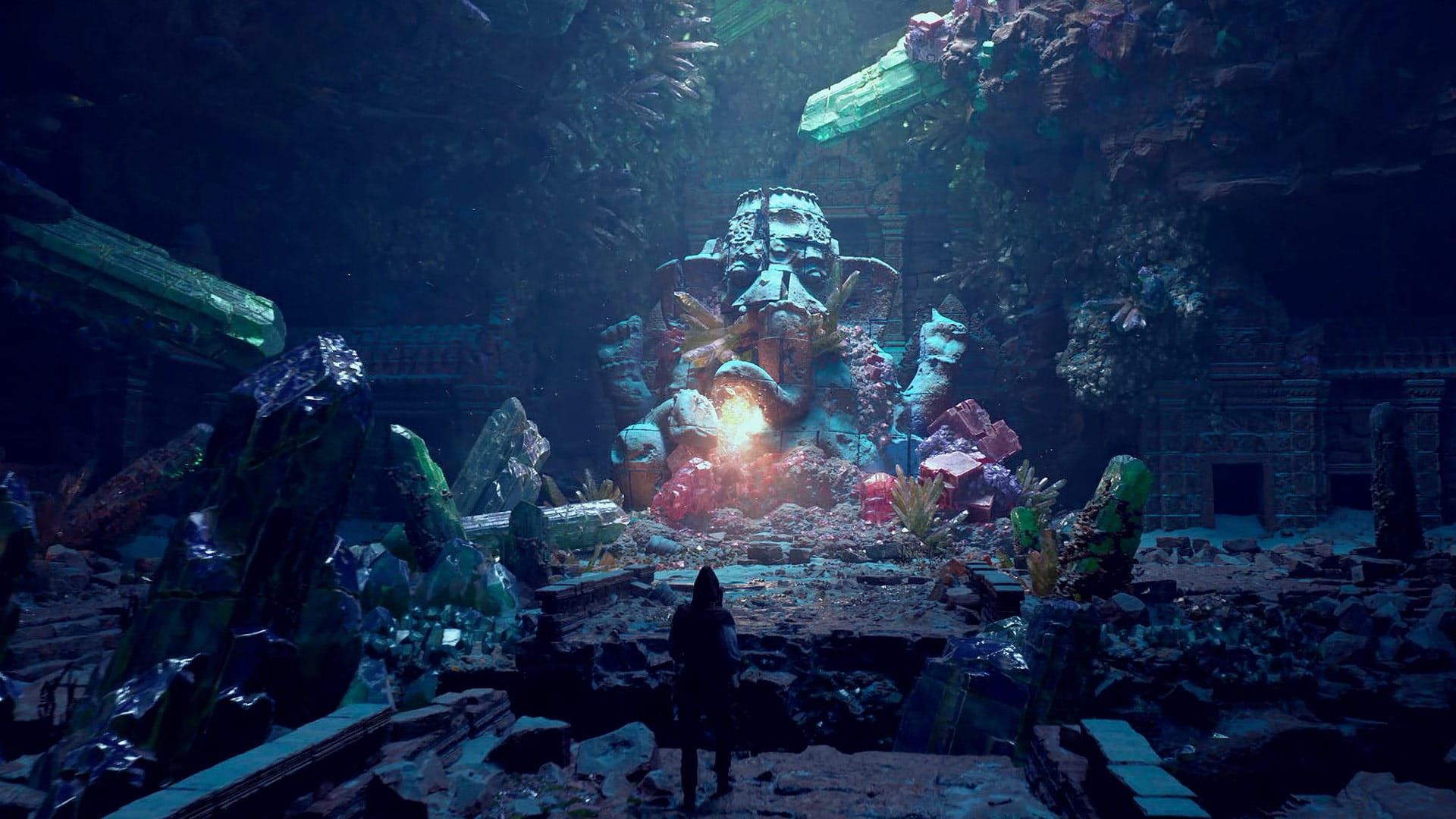
And this research became the inspiration for his second Gnomon Workshop title: Procedural Workflows for Games using Houdini. “As a massive fan of Cambodian architecture, I’ve always wanted to create a piece that honors its intricate style,” Giovani explains about his inspiration for his workshop concept. “Typically, when people picture Cambodian ruins, they imagine ancient stone structures intertwined with massive tree roots, surrounded by lush, green jungles. However, I wanted to avoid the obvious route and steer clear of what everyone else was doing. Instead of beautiful green trees, which easily make an environment look pretty, I decided to challenge myself by placing this architecture in a dry, desert terrain. Removing the natural beauty of greenery made embellishing the set a real puzzle. That’s where the crystals came in.”
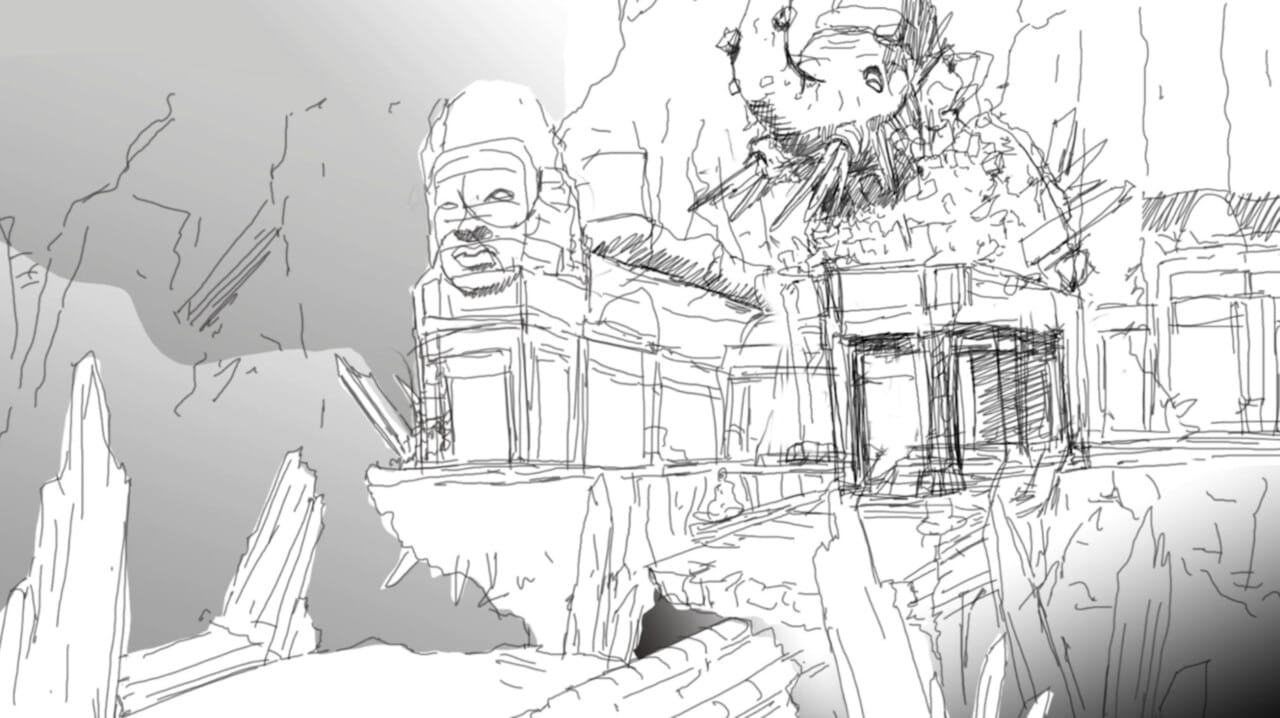
Before committing to any final environment design, Giovani stresses the importance of the blockout phase. “It’s tempting to jump straight into high-resolution sculpting and micro-detailing, he explains. “Rushing this process is exactly why so many early projects fail. Early in my career, I destroyed so many personal pieces because I suffocated my models with heavy detail, foolishly believing that visual noise would save a weak idea. I learned a brilliant method from studying the legendary concept artist Syd Mead. He proved his concepts in strict stages: stage 1 is to create a tiny thumbnail sketch to see if the core composition works; stage 2 is to create a slightly larger sketch to test colors, forms, and secondary details, and stage 3 is to commit to the final, high-fidelity painting only after the idea is fully proven.”
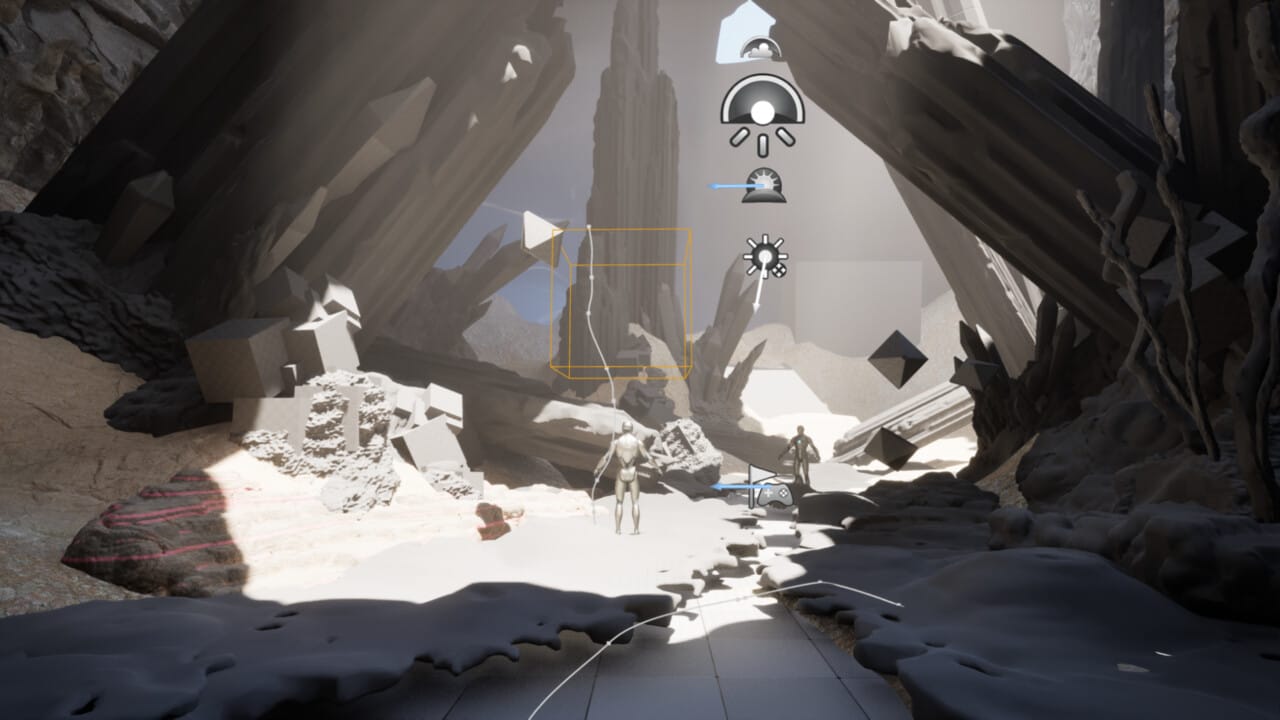
Stage 2 is where Giovani translates Syd Mead’s workflow in 3D: “I replicate this by making very quick 3D sketches using gray boxes,” he explains. “I often reuse assets from older projects just to speed up the layout. This stage allows me to test proportions, lines of sight, and player flow before committing to any heavy modeling,” he explains. “Detailed assets and polish are always the final step. If an environment doesn't feel good to run around in when it is just simple grey boxes, no amount of beautiful detail will save it.”
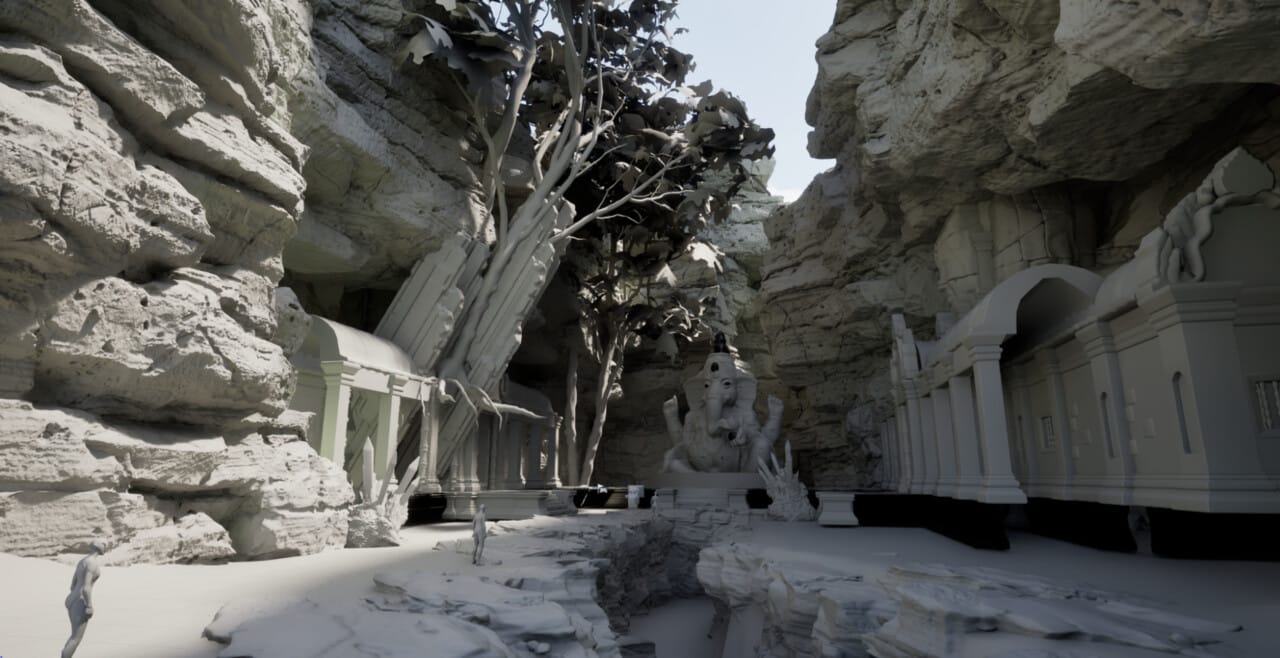
When working as an environment artist, production strategy will be primarily driven by timelines and technical constraints. Giovani advises: “Before you dive deep, you need to ask yourself: Do I have the time available for this scale, or should I make the environment smaller? Do I have the technical skills to build the in-engine materials? Is there a specific software I need to learn to make this workflow faster and easier? And how can I break this down into a smart, reusable modular kit of architectural and rock assets?”
Creating a Visual Anchor that Supports Gameplay
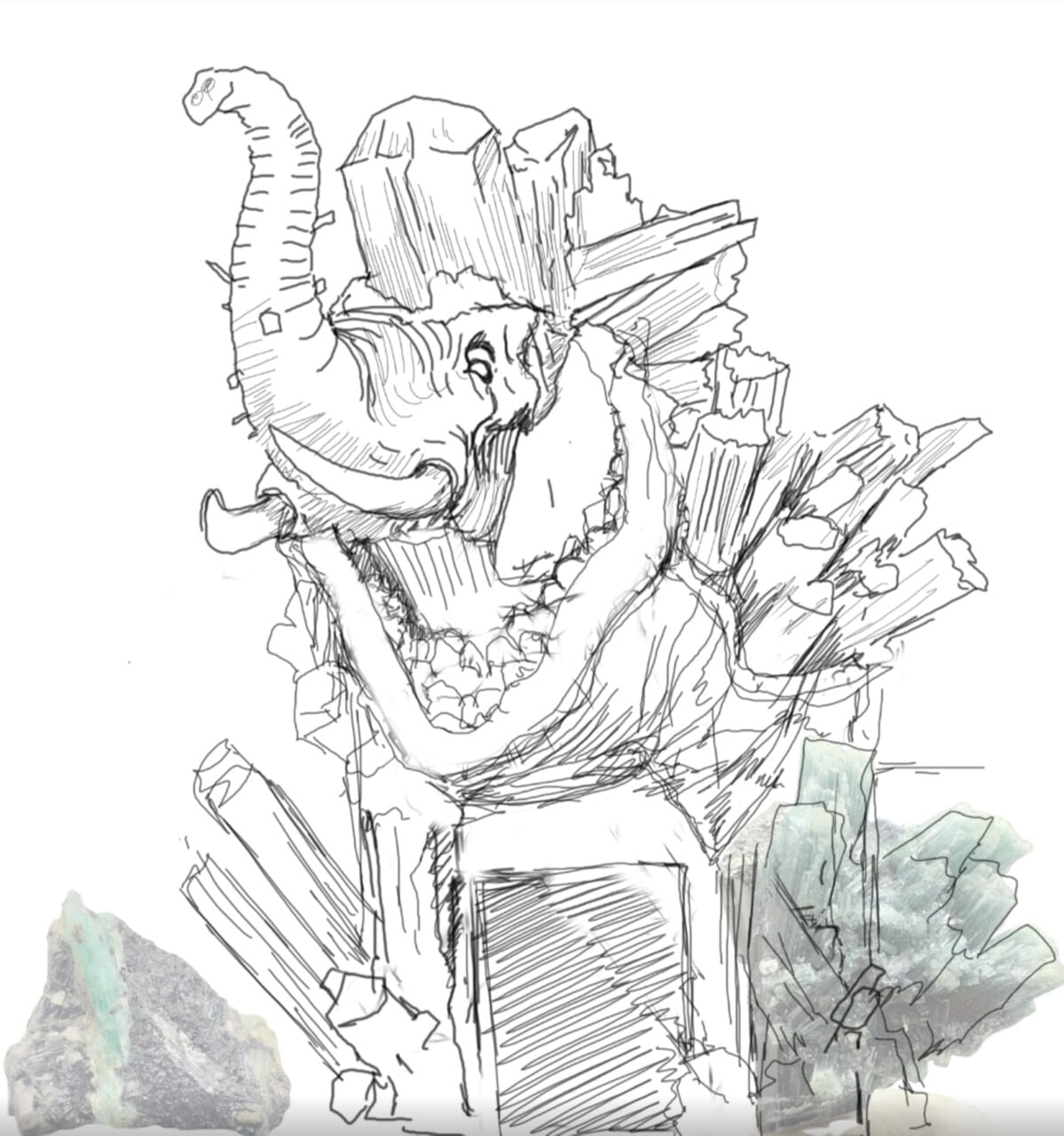
Giovani likes to design a clear visual anchor — or focal point — and work his way outwards to catch the viewer's eye. “Once I lock in an environment concept, I immediately establish my camera composition. Building only what the camera sees saves hours of production time.” He continues: “I always look for the narrative: What story does this anchor tell, and how do the surroundings support it? For this specific environment, I wanted the focal point to tell a story of nature reclaiming the ancient: a massive elephant statue engulfed by raw, growing crystals.”
Testing Assets, Materials & Color Palettes
“Most artists want to jump right into world-building on day one,” Giovani begins. “It’s incredibly tempting to start building the landscape and mountains, placing hundreds of assets, and painting large terrains immediately. But proving your assets is the best way to avoid ending up hunting for mistakes across a giant, unmanageable canvas. In production, this step can happen simultaneously because we need the level mechanics to work.”
For personal work, Giovani prefers a different approach: “Before I build out the world, I build a ‘test gym,’ or a ‘prop zoo.’ This is essentially a small, isolated corner — or slice of the map — where I can experiment safely. Keeping it small at the beginning is the best way to iterate rapidly without the overwhelming weight of an entire environment hanging over you.”
Instead of trying to construct a city, he takes one pillar, one rock, and one architectural piece and places them under his primary lighting setup. This ‘gym’ serves two critical purposes before he scales up production: first, he can test color harmony. “Colors look entirely different in a texture authoring tool than they do under an in-engine skybox,” he explains. “Your test gym lets you see how your colors react to global illumination, shadow tones, and bounce light. You can quickly dial in your contrast and ensure your focal points pop against the surrounding background colors.” Second, he can test combinations of materials. “This is where you stress-test your rough textures,” he continues. “How does the roughness of your sculpted stone look right next to a highly reflective crystal material?
By locking in the color palette, material behavior, and modular scale within a tiny, controlled environment, Giovani establishes a solid visual anchor. “Once that single corner looks and feels high-quality, expanding to build out the rest of your massive world becomes a smooth, predictable process,” he explains.
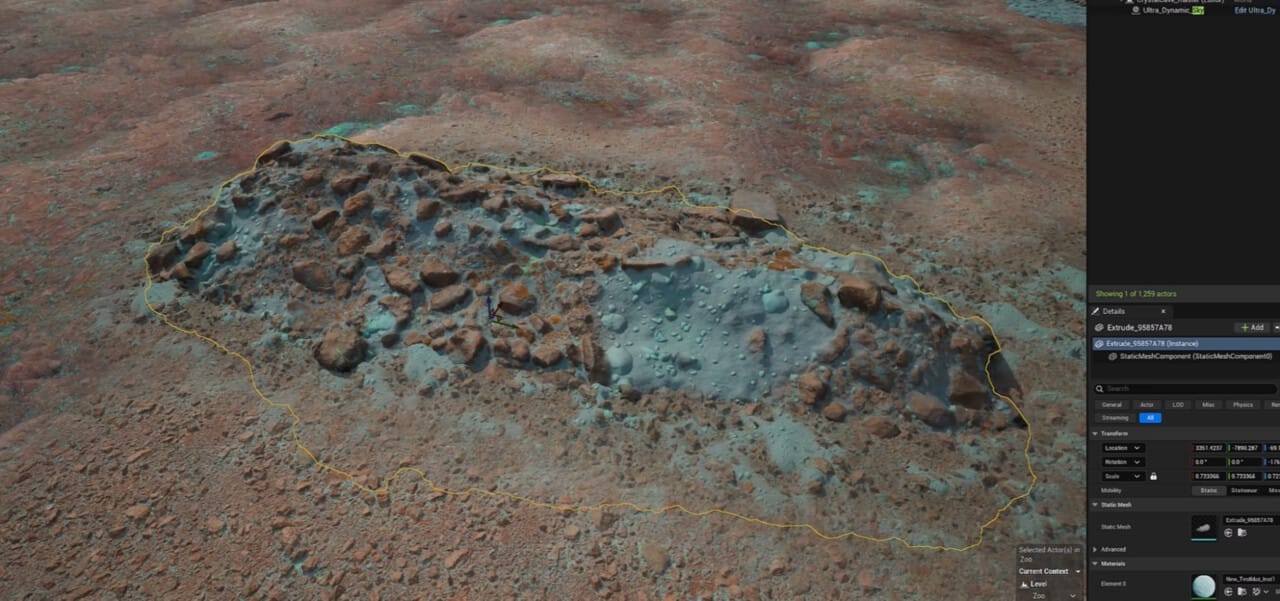
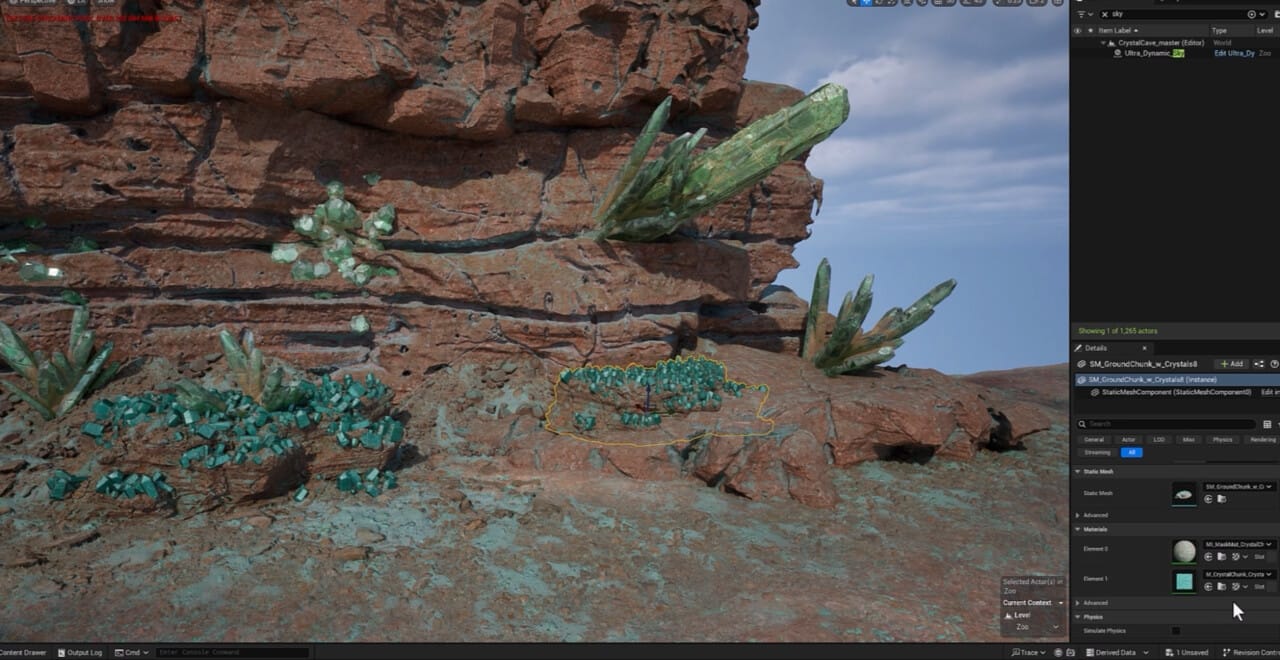
In this environment, Giovani initially wanted to match the warm tones of a desert with red sand, but he felt this would be too predictable a choice. “To create visual tension, I pivoted to a striking turquoise color, which perfectly aligned with my crystal references. It was all about juxtaposition: blending blue sand into the rocks and crystals so they felt like they naturally belonged to the environment.”
Scaling Up to the Final Landscape
Once Giovani has successfully identified his main objects, material behaviors, and color harmony in an isolated test gym, it’s time to scale things up. “This is where the magic happens,” he says. “I begin expanding into the broader environment, replacing my rough gray boxes with real, polished modular pieces.
“At this specific stage, I don't care about micro-details, props, or small clutter,” he explains. “I am tackling large spatial design, and I focus heavily on the primary geometry, sculpting the terrain, placing huge cliff walls, as well as using large rock structures to fill in the surroundings and block out the boundaries of the world. With the natural environment established, I lock down the architectural elements, crystals, and pathways and position my main focal point. Everything built up to this point exists to draw the viewer’s eye toward that central narrative anchor.”

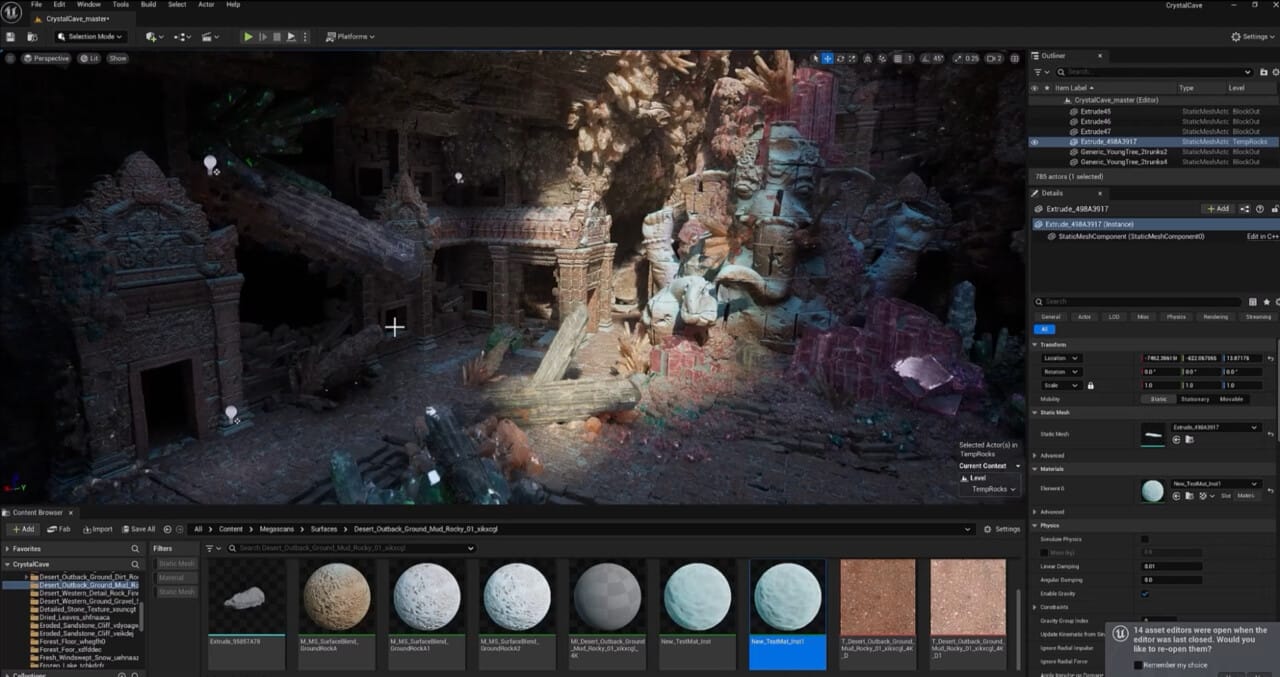
Giovani advises that when you transition from gray boxes to final structures, it’s important to always consider how you will light the environment. “Light dictates the mood, guides player navigation, and reveals your material textures,” he explains. “You have to ask yourself hard, definitive design questions early, including: Are you inside a subterranean cave system? If so, will your primary light source be natural daylight streaming through a massive ceiling fissure from far above, or will it rely entirely on artificial lighting, such as glowing torches and flickering candles? How will the light hit your focal point? If you have a massive elephant statue covered in crystals sitting in a dark cavern, a sharp beam of sunlight cutting through a hole in the ceiling will make those crystals refract and pop beautifully against the surrounding dark rocks.”
He continues: “Lighting isn't something you just slap on at the end of a project like a post-process filter. It is an active structural element that you must design around while placing your large-scale rocks and architecture. By treating light as a core pillar of your layout phase, you ensure that the final environment reads perfectly from the very first frame.”
Fine-Tuning the Final Environment
When approaching the end of the project, and once every major element has been placed and works, Giovani moves into the final phase: adjustment, micro-detailing, and final polish. “This is where you transform a static 3D layout into a living, breathing world,” he explains. “I spend a significant amount of time zooming in to micro-detail my materials and fine-tune the exact positioning of assets.”
He continues: “A major part of this stage is vertex painting. In the real world, dirt gathers in corners, and dust settles over time. By painting material blends directly onto the assets where they intersect with the ground or other structures, you break up harsh digital seams and naturally incorporate them in the surrounding environment.”
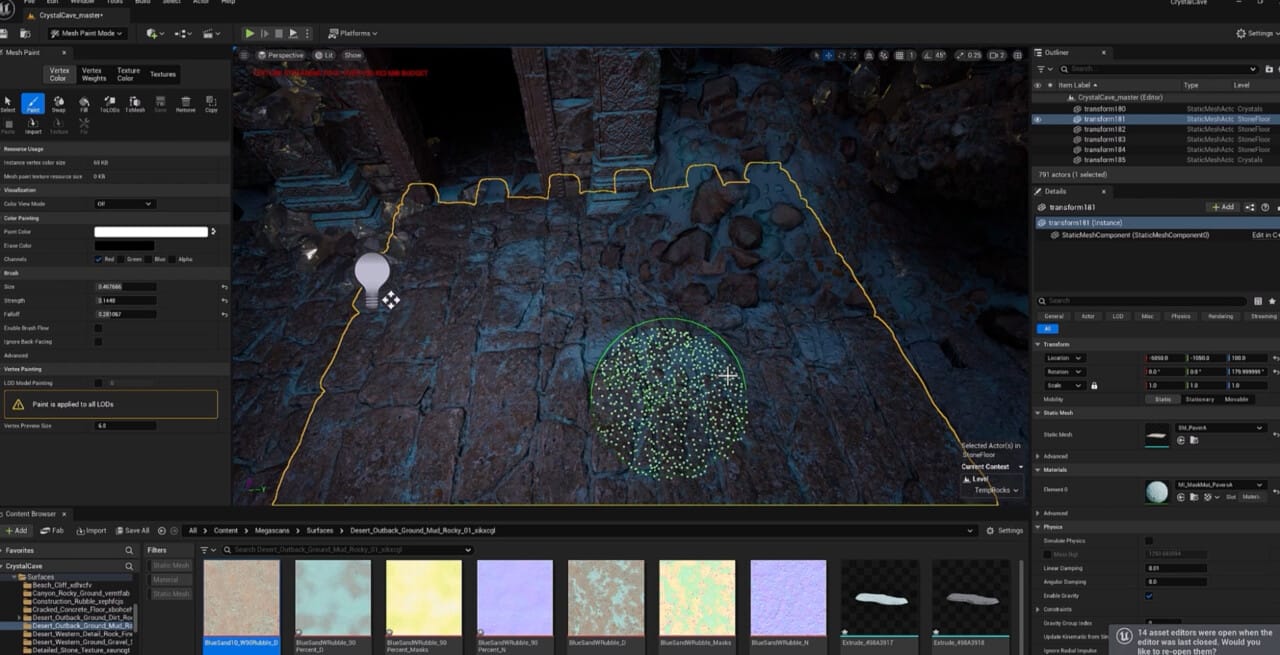
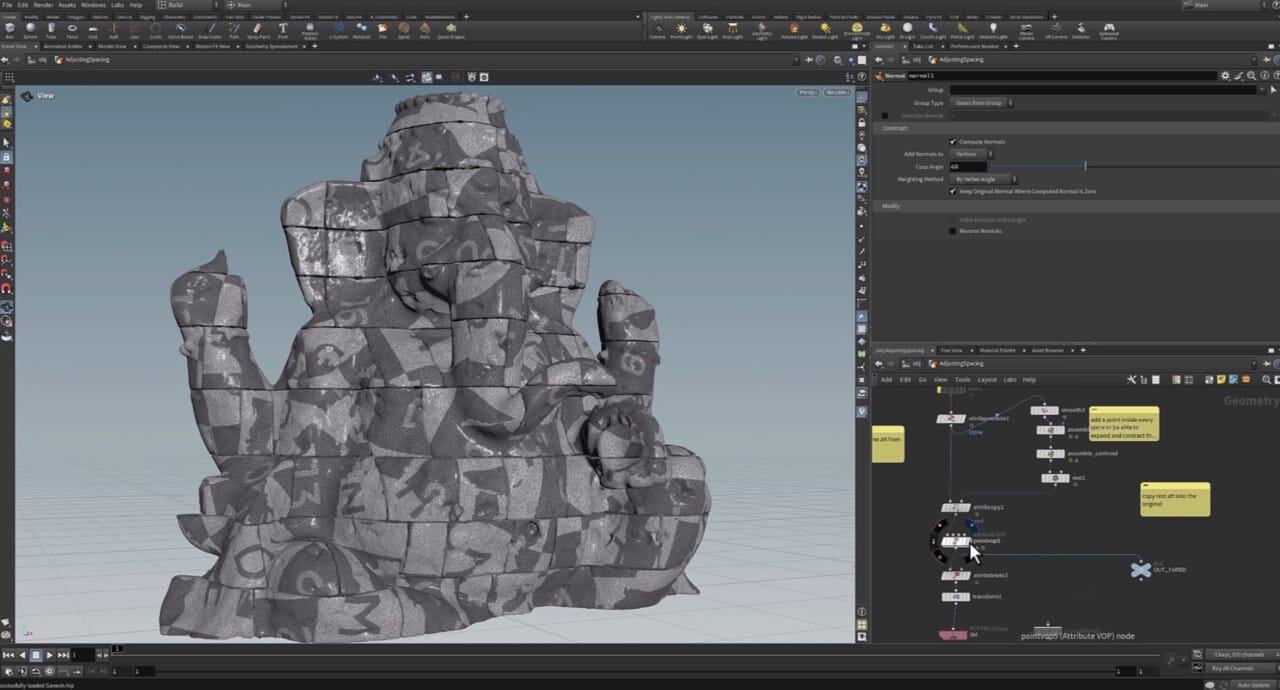
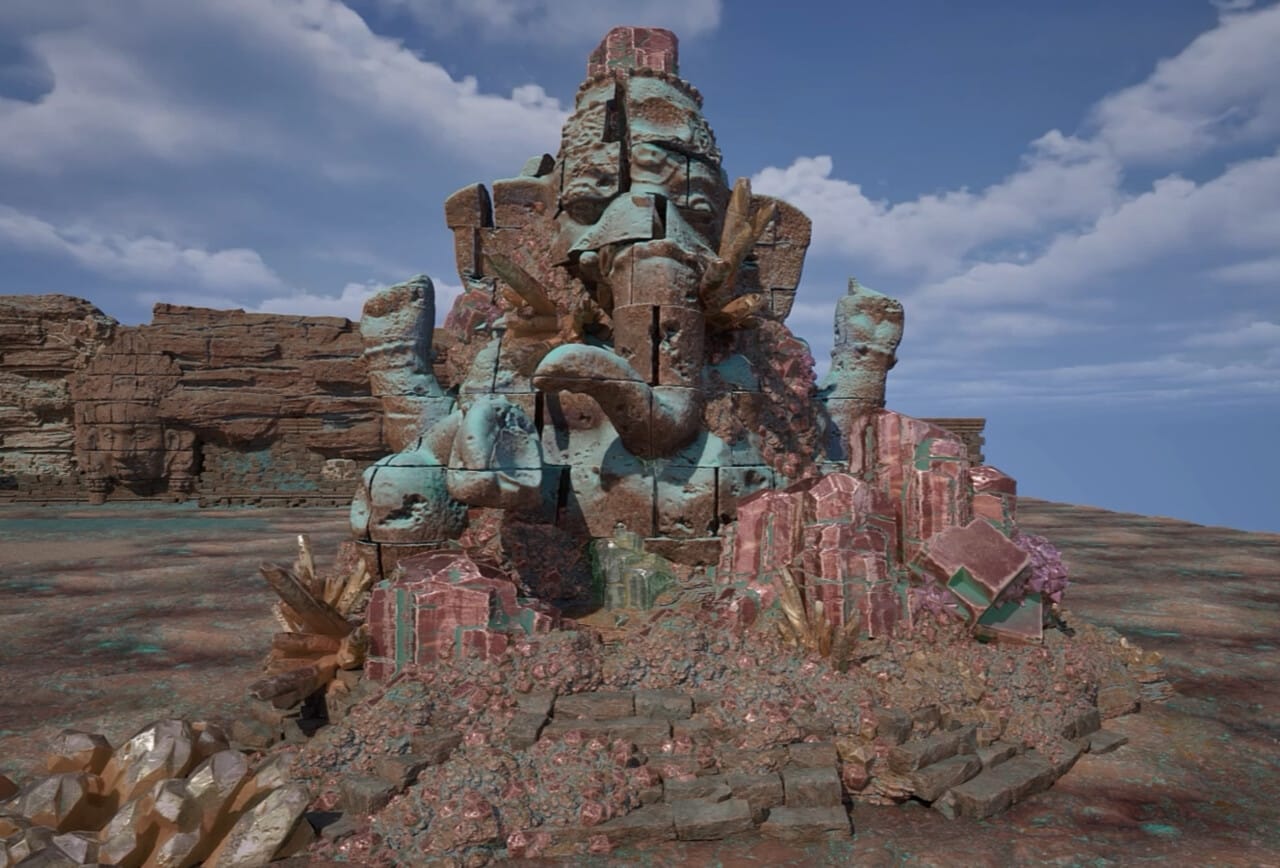
To watch Giovani build out this environment over the course of 4 hours, check out his Gnomon Workshop title for a behind-the-scenes look that walks you through every step of the process:
Building a Career in AAA GamesTo build a lasting career as an environment artist, Giovani believes that an artist’s growth should follow a three-tier pyramid:
Tier 1: “Before ever opening a 3D viewport, you must master perspective, scale, composition, and light. These core skills are entirely free and don't require an expensive computer, just a pencil, a sketchbook, and a commitment to observing the real world.”
Tier 2: “This is where you translate your trained eye into the digital space, mastering industry-standard software and the production pipelines needed to build modern video games.”
Tier 3: “As you mature, you stack advanced technical tools onto your creative skillset, diving into procedural asset generation and complex technical problem-solving.”“Even though every tier is vital to modern production, the core fundamentals will always be my favorite, as you need to discover places, experience nature, and then try to recreate in 3D what you see out in the real world.” — Giovani Magana

Related News
An Interview with Colleen Larson
Sep 10, 2026
Discover The Gnomon Workshop Learning Paths
Mar 06, 2026
Beauty in the Beast: Neville Page on Burnout, Mindset & Creative Survival
May 07, 2025